Composite Veneers in Los Angeles
Composite Veneers Los Angeles, CA
A full smile change in a single visit, from $300 per tooth.
Composite veneers give you a straighter, whiter smile in one appointment at our Los Angeles office. Instead of waiting two weeks for a lab to make porcelain shells, your dentist sculpts tooth-colored resin directly onto your teeth, so you walk out the same day with the result. Fees start at $300 per tooth.

Composite Veneers on Wilshire Blvd
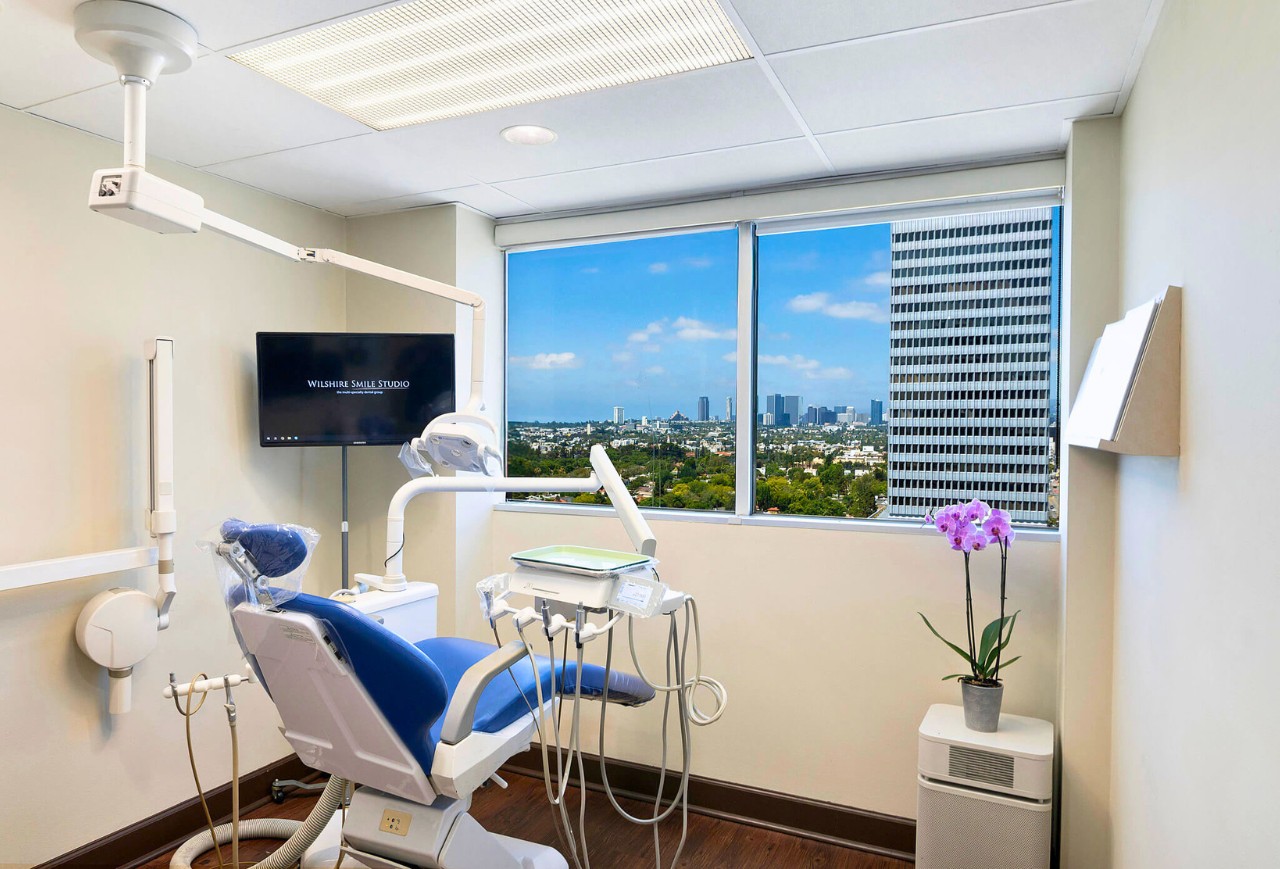
Composite Veneers at Wilshire Smile Studio
A composite veneer, also called a composite dental veneer, is a thin layer of dental resin shaped over the front of a tooth to change its color, shape, or length. It’s the same material we use for white fillings and cosmetic bonding, applied across the whole visible surface and polished until it looks like natural enamel. Because the work is done chairside in one visit, there’s no lab wait and no temporaries. Because the resin is sculpted by hand, the result depends on the dentist’s eye. Wilshire Smile Studio has been placing composite veneers on Wilshire Blvd since 2002, and most cases need no drilling and no anesthetic.
The Material
Composite veneers are built from dental composite resin: a matrix of methacrylate polymer loaded with fine glass and silica filler particles. The same class of material is used for tooth-colored fillings. The filler content determines how well the surface polishes and how it resists wear, which is why a modern nanohybrid composite holds its luster longer than the microfilled resins used decades ago. The resin is bonded to lightly etched enamel and cured in layers with a visible-light source, so the finished veneer is chemically attached to the tooth rather than cemented over it.
For a general overview of veneers as a treatment class, see the American Dental Association’s patient resource at MouthHealthy.
What Composite Veneers Fix
- Chipped or Worn Edges Rebuild damaged teeth and even out your smile line.
- Stained Teeth Cover discoloration that whitening cannot lift.
- Gaps Between Teeth Close small spaces without orthodontics.
- Uneven Shape or Length Reshape teeth for a balanced, uniform look.
- Several Teeth in One Visit Treat the teeth that show without a laboratory stage.
Composite vs. Porcelain vs. Bonding
Each option fits a different goal. Here’s how the three compare.
| Option | Visits | Lasts | Best for |
|---|---|---|---|
| Composite veneers | One visit, no lab | 5 to 7 years | Changing the shape or color of several teeth in one visit |
| Porcelain veneers | Two to three, lab-made | 10 to 15 years | The most durable, stain-proof result |
| Dental bonding | One visit | 5 to 10 years | A single chip or gap |
If durability is the priority and the budget allows, porcelain veneers win. For one chipped tooth, bonding costs less. Composite sits between the two: a single-visit option for treating several teeth, at a lower fee than porcelain.
Cost and Financing
Composite veneers start at $300 per tooth.
Most patients treat the six to eight teeth that show when they smile, so a full smile makeover often starts around $1,800 to $2,400. New patients can begin with our $95 exam and X-rays promotion, you can split treatment with CareCredit, and you’ll have your exact price in writing before anything is scheduled.
What Happens at Your Appointment
- Shade Match We match the resin to your natural teeth or the whiter shade you want.
- Light Polish The tooth surface is lightly prepared, with no drilling in most cases.
- Sculpt and Layer Your dentist builds the resin up in thin layers, shaping each by hand.
- Cure A curing light hardens each layer in seconds.
- Final Polish Shaping and polishing until the surface looks like enamel.
Plan on about 30 to 60 minutes per tooth, so a couple of teeth take an hour or two and a full smile takes most of a day. Either way it’s one visit, with no temporaries and no second appointment.
Who Composite Veneers Suit, and Who They Don’t
Composite veneers work best when your teeth and gums are healthy and the changes you want are cosmetic. They’re not the right first step for everyone, and we’d rather say so before you spend anything.
- A Good Fit Healthy gums, enough enamel to bond to, and small to moderate changes in color, shape, or spacing.
- Gum Disease or Decay Comes First Active inflammation or an untreated cavity has to be handled before any cosmetic work.
- If You Grind or Clench Resin chips faster under grinding. We can still treat you, but plan on a night guard to protect the result.
- Heavy Wear or Thin Enamel When there isn’t much enamel left to bond to, porcelain or a crown usually holds up better.
- Significant Crowding If teeth are well out of line, straightening them first gives a better result than covering them.
We’ll tell you at the consultation if composite veneers aren’t the right call for your case, and what we’d suggest instead.
How They Wear, and How to Care for Them
- Staining Composite picks up coffee, wine, and cigarette stains faster than porcelain. Rinsing with water afterward helps, and we polish the veneers at every cleaning, which lifts most surface staining.
- Whiten First Whitening gel won’t lighten resin once it’s on, so whiten your natural teeth first and we’ll match to the brighter shade.
- Lifespan Plan on five to seven years before a refresh or replacement. That matches the research: clinical reviews of direct composite veneers report roughly 80 to 89 percent still in service at five years, with wear and staining the usual reasons one gets redone.
- Easy Repairs Fixes are quick and inexpensive, and we don’t need to redo the whole set to repair one tooth.
- Brush and Floss as Normal Composite cleans like natural enamel. A soft brush and a non-abrasive paste keep the polish longer.
- Don’t Use Your Teeth as Tools Opening packaging or biting nails chips resin faster than it chips enamel.
- Wear a Night Guard if You Grind It’s the single best thing you can do to make the result last.
Why Wilshire Smile Studio
We are a multi-specialty practice on Wilshire Blvd, treating Los Angeles smiles since 2002. Cosmetic work, oral surgery, implants, and general dentistry all happen under one roof, so if your case needs something different, you won’t be referred across town.
Composite Veneers FAQ
- How much do composite veneers cost in Los Angeles?
- Composite veneers start at $300 per tooth at our office. The final price depends on how many teeth you’re treating and how much reshaping each one needs. We’ll put your exact price in writing before you commit, and CareCredit lets you pay over time.
- Does dental insurance cover composite veneers?
- Usually not. Insurers treat veneers as cosmetic, so they rarely contribute unless the tooth is being rebuilt after damage or decay. We’ll check your plan before you commit, and CareCredit lets you spread the cost if you’d rather not pay it in one go.
- How long do composite veneers last?
- Five to seven years is typical, and the clinical evidence agrees: studies of direct composite veneers report about 80 to 89 percent still in place at five years. Daily habits move that number. Coffee, red wine, and smoking shorten the lifespan, while good brushing and regular cleanings stretch it. When a veneer wears out, we repair or replace it in one visit.
- What is the difference between composite and porcelain veneers?
- Material and process. Porcelain veneers are custom shells made in a lab over two or three visits, last 10 to 15 years, and resist stains. Composite veneers are sculpted by hand in one sitting and cost about a third of the price, but they wear faster and can pick up stains.
- Are composite veneers the same as dental bonding?
- They use the same resin, but they’re not the same treatment. Bonding repairs a specific spot, like a chipped corner or a small gap. A composite veneer covers the entire front surface of the tooth to change its overall shape or color.
- Can composite veneers be done in one day?
- Yes. There’s no lab involved, so shade matching, sculpting, and polishing all happen in one appointment. A couple of teeth take an hour or two, and a full set of six to eight takes most of a day, but you leave with the finished result.
- Do composite veneers ruin your natural teeth?
- No. In most cases we only lightly polish the enamel before applying the resin, without drilling. That also means the process is usually reversible, which is not true of porcelain veneers.
- Does getting composite veneers hurt?
- For most people, no. Because we usually don’t drill or remove enamel, most cases need no anesthetic at all. If a tooth needs reshaping first, we’ll numb the area. Tell us if you’re anxious and we’ll take it slower.
- Can composite veneers be whitened?
- No, whitening gel does not work on resin. If you want a brighter smile, whiten your natural teeth first and we’ll match the veneers to the new shade. Surface stains on existing veneers can often be polished away at a cleaning.
Get in Touch
To book your own appointment, use our online self scheduling widget
Office Hours
Making Your Smile Affordable
At Wilshire Smile Studio, we want you to be able to afford the highest quality of dental care. We offer payment plans with CareCredit. To see if you qualify, click on the button below.