How to Clean Invisalign: The Complete Guide to Keeping Your Aligners Clear and Fresh
June 14, 2026
If you’re wearing Invisalign, you already know how transformative clear aligners can be for your smile. But here’s something many new patients underestimate: how you clean your aligners matters just as much as how consistently you wear them. Dirty aligners don’t just look unpleasant, they harbor bacteria, cause bad breath, develop stubborn stains, and can even compromise your oral health over the course of treatment.
The good news is that proper Invisalign cleaning doesn’t require expensive products or complicated routines. A few simple daily habits are all it takes to keep your aligners crystal clear, fresh-smelling, and hygienic from the first tray to the last. This complete guide covers everything you need to know about Invisalign care — the best cleaning methods, what to avoid, how to remove stains, and how to maintain your aligners whether you’re at home or traveling.
Why Cleaning Invisalign Aligners Is Important
Prevent Bacteria Buildup
Your mouth is home to hundreds of bacterial species at any given time. When you wear aligners for 20 to 22 hours a day, those bacteria accumulate on the aligner surface — especially if you are not cleaning them regularly. Over time, this bacterial film hardens into plaque that is increasingly difficult to remove and can contribute to tooth decay and gum disease.
Avoid Bad Breath and Odors
One of the most common complaints from patients who skip regular cleaning is persistent bad breath. Bacteria trapped between your aligners and teeth create sulfur compounds, the primary cause of unpleasant odors. Clean aligners mean fresh breath throughout the day.
Keep Aligners Crystal Clear
Invisalign aligners are designed to be virtually invisible. But neglecting your Invisalign hygiene causes them to become cloudy, yellow, or visibly dirty — defeating the entire aesthetic purpose of choosing clear aligners over braces. Daily cleaning keeps them looking as transparent as the day you received them.
Protect Your Oral Health
Bacteria and food particles trapped under dirty aligners create an ideal environment for cavities to develop. Since aligners hold substances against your tooth surfaces for extended periods, the risk of enamel damage increases significantly without proper cleaning habits.
How Often Should You Clean Invisalign?
Daily Cleaning Routine: Clean your aligners at least twice a day. Once in the morning and once before bed. This baseline routine prevents the majority of bacteria buildup and keeps odors under control.
Morning Cleaning Habit: Bacteria multiply while you sleep. When you wake up, clean your aligners before putting them back in — even if you brushed your teeth the night before. A quick rinse and gentle brush every morning makes a significant difference in overall aligner hygiene.
Cleaning After Meals: Every time you remove your aligners to eat or drink, rinse them under lukewarm water before setting them aside. When you’re ready to reinsert them, brush your teeth first. This prevents trapping food particles and sugars against your teeth under the aligner.
Deep Cleaning Schedule: In addition to daily cleaning, incorporate a deep soak at least once per day, ideally in the evening. Soaking with cleaning crystals or retainer tablets removes buildup that brushing alone can’t reach.
The Best Way to Clean Invisalign Aligners
Rinse Aligners Every Time You Remove Them
The single simplest habit you can build is rinsing your aligners under lukewarm water every single time you take them out. This removes loose saliva and food debris before they have a chance to dry and harden onto the aligner surface.
Brush Aligners Gently
Use a soft-bristle toothbrush dedicated solely to your aligners, not the same one you use for your teeth. Gently brush all surfaces of the aligner in circular motions. Never scrub aggressively, as this can create microscopic scratches that trap bacteria and cloud the plastic.
Use Lukewarm Water
Always use lukewarm — never hot — water when rinsing or brushing your aligners. Hot water warps the thermoplastic material, compromising the fit of your aligners and potentially disrupting your treatment progress.
Soak Aligners Daily
Daily soaking is the most effective way to deep clean your aligners and eliminate bacteria that brushing misses.
Step-by-Step Cleaning Process
Follow this routine every day for best results:
- Remove aligners and rinse immediately under lukewarm water
- Rinse your mouth and brush your teeth
- Gently brush aligners with a soft toothbrush and clear soap
- Soak aligners in cleaning solution for the recommended time
- Rinse thoroughly before reinserting to remove any cleaning product residue
What Can You Use to Clean Invisalign?
Invisalign Cleaning Crystals: Invisalign’s own brand of cleaning crystals is one of the most effective and recommended options. Dissolve one packet in water, soak your aligners for 15 minutes, then rinse thoroughly. They’re specifically formulated for the material used in Invisalign trays and won’t damage or discolor them.
Clear Antibacterial Soap: A small amount of clear, unscented antibacterial dish soap works well for daily brushing. The key word is clear, colored soaps can stain aligners. Avoid heavily fragranced soaps as they can leave a taste residue.
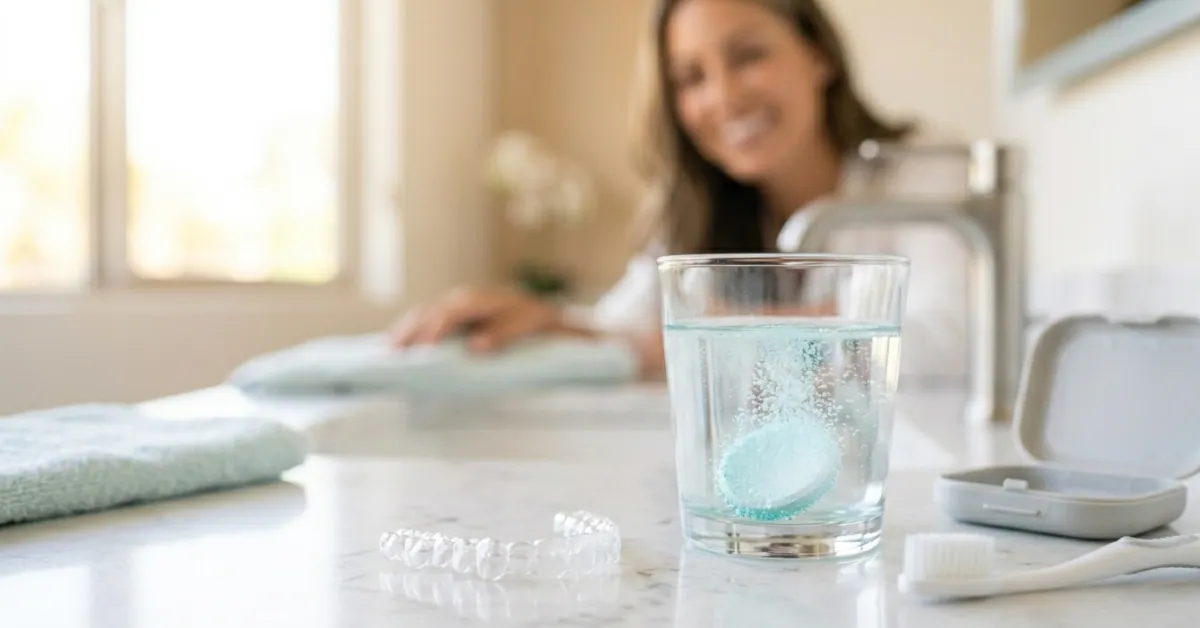
Retainer Cleaning Tablets: Over-the-counter retainer cleaning tablets such as Retainer Brite or Efferdent are safe and effective for Invisalign aligners. Drop one tablet in a glass of lukewarm water, soak for the recommended time, and rinse well. These are widely available and affordable.
Invisalign Cleaning System: Invisalign also offers a dedicated cleaning system — a small ultrasonic device that uses vibration to dislodge bacteria and debris from aligner surfaces. While not essential, it’s a convenient upgrade for patients who want the most thorough clean possible.
Can You Brush Invisalign With Toothpaste?
This is one of the most common Invisalign cleaning mistakes. Most toothpastes contain abrasive particles designed to scrub tooth enamel — which is far harder than the thermoplastic material of your aligners. Using toothpaste on aligners creates tiny scratches that cloud the plastic, make it appear yellow, and create rough surfaces where bacteria thrive.
Instead of toothpaste, use clear antibacterial soap or cleaning crystals for brushing your aligners. These clean effectively without the abrasive particles that damage aligner material.
Best Cleaning Products for Invisalign
- ✅ Invisalign Cleaning Crystals
- ✅ Clear unscented antibacterial soap
- ✅ Retainer Brite tablets
- ✅ Efferdent or similar denture cleaning tablets
- ❌ Whitening toothpaste
- ❌ Regular fluoride toothpaste
- ❌ Colored or scented soaps
What Not to Use When Cleaning Invisalign
Hot Water: As mentioned, hot water warps aligner plastic. Even briefly rinsing under hot tap water can subtly distort the shape of your tray, affecting fit and treatment accuracy. Always use lukewarm or cool water.
Bleach: Bleach is far too harsh for aligner material. It degrades the plastic, weakens the structural integrity of the tray, and can cause chemical residue that irritates your gums and mouth.
Mouthwash: Most mouthwashes contain alcohol and artificial dyes — both of which damage and stain aligner material. Many patients assume mouthwash is a good cleaning option, but it’s one of the most common causes of yellowed, damaged aligners.
Colored Soaps: Any soap with artificial coloring can tint your aligners over time. Stick exclusively to clear, unscented formulas.
Abrasive Cleaners: Baking soda, scrubbing powders, and similar abrasive products scratch aligner surfaces. Keep it simple — gentle products only.
How to Remove Stains From Invisalign Aligners
Coffee Stains: Coffee is one of the leading causes of stained Invisalign aligners. Always remove your aligners before drinking coffee. If staining has already occurred, soak in cleaning crystals or retainer tablets and gently brush — repeat daily until the staining fades.
Tea Stains: Like coffee, tea contains tannins that stain plastic quickly. The same removal method applies — daily soaking and gentle brushing. Prevention is far easier than removal, so make it a habit to remove aligners for all hot beverages.
Smoking and Nicotine Stains: Nicotine causes severe, fast-acting yellowing of aligner plastic that is extremely difficult to reverse. Smoking with aligners in is strongly discouraged — both for the staining and the oral health implications. If nicotine staining has occurred, cleaning crystals used consistently twice daily may reduce discoloration over time.
Food-Related Discoloration: Deeply pigmented foods like berries, tomato sauce, turmeric, and soy sauce can all cause yellow Invisalign aligners if eaten while wearing them or if trays are reinserted without brushing. Always brush before reinserting and soak stained aligners immediately.
How to Keep Invisalign Aligners Clear
Remove Aligners Before Eating: This is the most important rule for preventing stains. No food or colored beverages only plain water — while aligners are in. No exceptions.
Drink Water While Wearing Aligners: Plain water is the only safe drink with aligners in. It keeps you hydrated, helps rinse the aligner surface throughout the day, and doesn’t contribute to staining or bacterial growth.
Brush Before Reinserting: Every time you eat or drink and are ready to put your aligners back in, brush your teeth first. This prevents food particles and sugars from being sealed against your tooth surfaces under the aligner.
Store Aligners Properly: When your aligners are out, store them in their case — always. Leaving aligners exposed on a bathroom counter or wrapped in a napkin exposes them to airborne bacteria, increases risk of damage, and is the number one way aligners end up accidentally discarded.
Common Invisalign Cleaning Mistakes
Using Hot Water: Warps the plastic and ruins aligner fit. Always lukewarm or cool.
Skipping Daily Cleaning: Even one skipped cleaning session allows bacteria to multiply and odors to develop. Consistency is everything.
Leaving Aligners Out in the Open: Always store in the case. Open-air storage invites bacteria and increases the risk of damage or loss.
Eating With Aligners In: Food particles get trapped under the aligner, staining both the tray and your teeth. Always remove before eating.
Using Harsh Chemicals: Bleach, colored mouthwash, and abrasive cleaners damage aligner material irreversibly. Stick to approved cleaning products only.
How to Clean Invisalign While Traveling
Portable Cleaning Solutions: Travel doesn’t have to disrupt your Invisalign maintenance routine. Pack a small travel kit that includes retainer cleaning tablets, a soft travel toothbrush designated for your aligners, and a travel-size clear soap.
Travel-Friendly Cleaning Kits: Several brands offer compact Invisalign cleaning kits designed for travel. These typically include a small container for soaking, cleaning tablets, and a case — everything you need in a single pouch.
Cleaning Aligners Without a Soaking Solution: If you find yourself without cleaning tablets, rinse your aligners thoroughly under lukewarm water and brush gently with a wet soft toothbrush. This isn’t a substitute for proper soaking but keeps aligners clean in a pinch.
Emergency Cleaning Tips
- No soap available? Rinse thoroughly and brush with plain water until you can access proper cleaning supplies.
- On a long flight? Remove aligners during meals, rinse in the airplane bathroom, and brush before reinserting.
- Keep a spare aligner case in your bag, car, and desk at work — losing an aligner case is one of the most common travel mishaps.
How to Clean Invisalign Attachments and Teeth
Brushing Around Attachments: Attachment buttons bonded to your teeth create small ledges where plaque accumulates. Use a soft-bristle toothbrush at a 45-degree angle to clean carefully around each attachment, paying extra attention to the gumline.
Flossing Daily: Flossing remains essential during Invisalign treatment. Without the obstruction of braces wires, flossing with aligners is far easier — use it to your advantage and floss at least once daily to remove debris from between teeth.
Preventing Plaque Buildup: An electric toothbrush is particularly effective during Invisalign treatment, as the oscillating head reaches more surfaces more thoroughly than manual brushing. Use fluoride toothpaste on your teeth — just never on your aligners.
Professional Dental Cleanings: Continue your regular professional dental cleanings every 6 months throughout Invisalign treatment. Your hygienist can remove hardened tartar buildup that home care can’t address and monitor your gum health during active tooth movement.
Signs Your Invisalign Aligners Need Better Cleaning
Cloudy Appearance: Cloudiness is one of the earliest signs of bacterial film and mineral buildup. Increase your soaking frequency and switch to cleaning crystals if you’re only using soap.
Bad Odor: If your aligners smell unpleasant, bacteria levels are high. A thorough soak in cleaning tablets followed by a gentle brush should resolve the issue. If odor persists, consult your orthodontist.
Yellow Discoloration: Yellowing is typically caused by staining foods, drinks, or nicotine. Consistent daily soaking may reduce existing stains; prevention through dietary habits is the long-term solution.
Visible Plaque Buildup: White or off-white deposits on aligner surfaces indicate plaque buildup. This requires more thorough brushing and daily soaking to address.
Invisalign Care Tips for Long-Term Success
Create a Daily Cleaning Routine: Attach your aligner cleaning routine to existing habits — clean them when you brush your teeth morning and night. Habit stacking makes consistency effortless
Keep a Cleaning Kit Nearby: Keep a cleaning kit at home, at work, and in your travel bag. Accessibility removes every excuse for skipping a cleaning.
Follow Your Orthodontist’s Instructions: Your orthodontist’s cleaning recommendations are tailored to your specific treatment plan and aligner material. Follow their guidance above all else.
Replace Aligners on Schedule: Don’t extend the wear time of individual trays beyond what’s prescribed. Old trays accumulate more buildup and bacteria regardless of cleaning frequency.
Invisalign Care in Los Angeles
Regular checkups with your Invisalign dentist los angeles aren’t just about tracking tooth movement — they’re also an opportunity to assess your aligner hygiene, check for plaque buildup around attachments, and address any oral health concerns that arise during treatment.
Patients throughout Los Angeles, Santa Monica, Pasadena, and Long Beach benefit from working with experienced local providers who offer comprehensive support throughout every stage of treatment — from the first tray to the final retainer.
If you are ever unsure about your cleaning routine, notice persistent staining, or have concerns about your aligner fit or condition, your Los Angeles Invisalign provider is your best resource. Don’t wait until your next scheduled appointment — most offices are happy to address cleaning and maintenance questions between visits.
Frequently Asked Questions
How do you clean Invisalign aligners properly?
Rinse immediately after removal, brush gently with a soft toothbrush and clear soap, soak daily in cleaning crystals or retainer tablets, and rinse thoroughly before reinserting. Repeat this routine at least twice daily.
Can I use toothpaste to clean Invisalign?
No — most toothpastes are abrasive and will scratch aligner surfaces, causing cloudiness and bacterial buildup. Use clear antibacterial soap or dedicated aligner cleaning products instead.
How often should I soak my Invisalign aligners?
At least once per day — ideally in the evening as part of your nighttime routine. For heavy staining or odor issues, soaking twice daily is recommended.
What happens if I don’t clean my Invisalign?
Uncleaned aligners accumulate bacteria, develop bad odors, turn yellow or cloudy, and increase the risk of cavities and gum disease. Consistent cleaning is essential for both hygiene and aesthetics.
Can Invisalign get stained?
Yes — coffee, tea, wine, colored foods, and nicotine all stain aligner plastic. The best prevention is removing aligners before consuming anything other than plain water.
What’s the best cleaner for Invisalign?
Invisalign Cleaning Crystals are the top recommendation as they’re specifically formulated for Invisalign material. Retainer Brite tablets and clear antibacterial soap are excellent alternatives.
Conclusion
Knowing how to clean Invisalign properly helps keep your aligners clear, fresh, and free from harmful bacteria throughout treatment. By rinsing, brushing gently, soaking daily, and maintaining good oral hygiene, you can protect both your smile and your investment. For personalized Invisalign care and treatment guidance, consult an Invisalign dentist Los Angeles CA to keep your treatment on track and your aligners looking their best.